Sensory
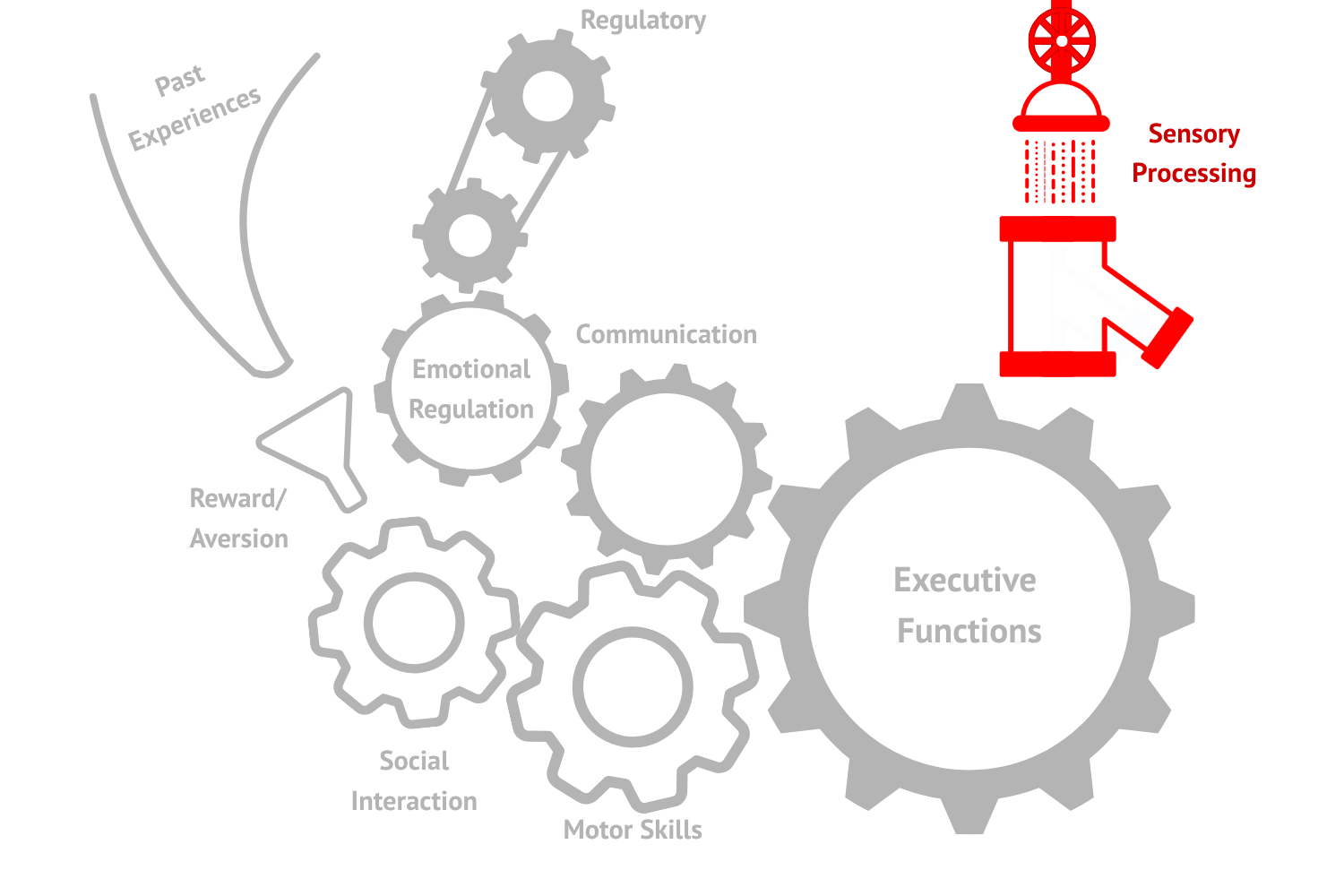
Sensory processing is how information comes into our bodies. Sensory integration is how our brains put it together. Most people know five senses: hearing, sight, smell, taste and touch. Occupational therapy recognizes three more. The vestibular sense is balance, the proprioceptive sense is where our body is in space, and the interoceptive sense is what's happening inside our body.
Every person has their own sensory profile. Someone can get too much information from one sense and too little from another. When information is processed slowly or quickly, it can be hard to integrate. This is happening continuously, every second of every day, and it can increase with stress. It isn't only the moments where you see distress.

Auditory
Auditory processing is hearing what is around us. Some people can't hear at all, and others can't stop noticing everything.

Visual
Visual processing is seeing what is around us. Some people can't see, and others can become overwhelmed by everything around them.

Olfactory
Olfactory processing is smelling what is around us. Some people can't smell, and others smell everything, even what no one else notices.

Gustatory
Gustatory processing is tasting what we eat and drink. Some people like really intense flavors, and others prefer more consistent tastes.

Tactile
Tactile processing is feeling what touches our skin. Some people don't like to be touched, and others seek out a lot of touch.

Vestibular
Vestibular processing is sensing our balance and movement. Some people can't keep their balance, and others are always seeking movement.

Proprioceptive
Proprioceptive processing is sensing where our body is in space. Some people can't coordinate their movements, and others can't keep still.

Interoceptive
Interoceptive processing is sensing what is happening inside our body. Some people notice when they're hungry while others never register pain.