Our Framework
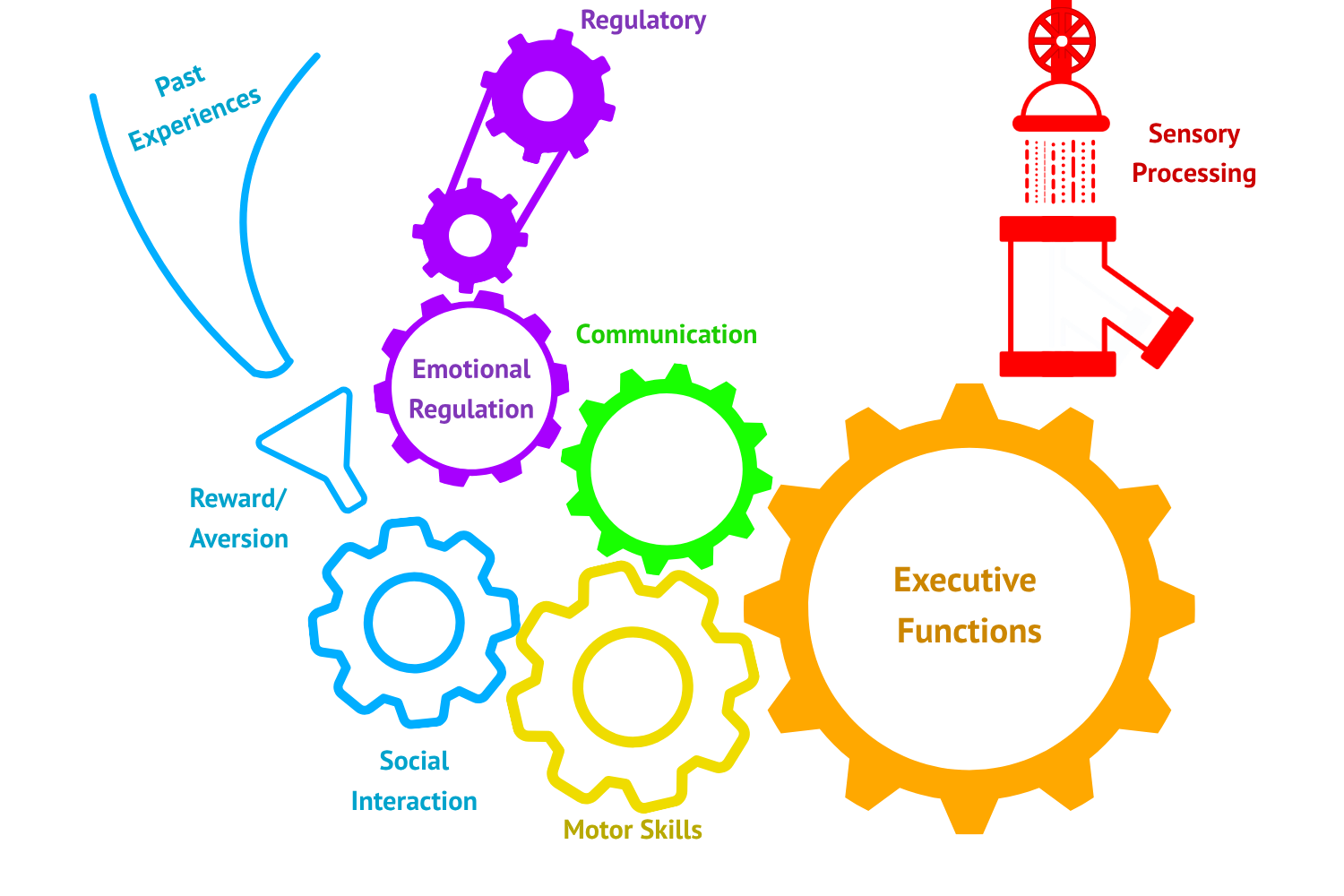
The Divergent Minds Framework explains how a person's brain takes in information, processes it, and responds to it. We built it to show why development follows a different trajectory for neurodivergent people, and what that means for support.
We start from one position: all brains are valid. Whatever a brain can or can't do, it exists, so it's valid. When a person's brain and their environment don't match, the environment creates the disability. Support bridges the gap between the two, so the person can get their needs met and access their own life.
The framework has six domains. Each one builds on the ones before it. Together they show what a task requires, why some tasks take so much effort, and where support can help.
Sensory
Sensory integration is how information comes into our bodies through eight senses, and how our brains put it together.
-
 Auditory
-
 Visual
-
 Olfactory
-
 Gustatory
-
 Tactile
-
 Vestibular
-
 Proprioceptive
-
 Interoceptive
Executive Functioning
Executive functions are the cognitive processes we use to get any task done, from getting dressed in the morning to writing a dissertation.
-
 Working Memory
-
 Shift
-
 Initiation
-
 Planning
-
 Organization
-
 Self-Monitoring
-
 Inhibition
-
 Emotional Regulation
Motor Skills
Motor skills are any physical movement a person performs, from speech to handwriting to running.
-
 Oral Motor
-
 Visual Motor
-
 Fine Motor
-
 Gross Motor
Communication
Communication is how we take in what others mean and share what we mean, whether through spoken words, typing, or behavior.
-
 Receptive
-
 Expressive
-
 Pragmatic
-
 Nonverbal
Social Interaction
Social interaction is how we connect and build relationships with other people.
-
 Self-Awareness
-
 Self-Exploration
-
 Mutual Understanding
-
 Interdependence
-
 Self-Advocacy
Emotional Regulation
Emotional regulation is how we recognize what we're feeling and get back to a regulated state, in our emotions and in our body.
-
 Attention
-
 Connection
-
 Activation
-
 Exertion
-
 Restoration