Executive Functioning
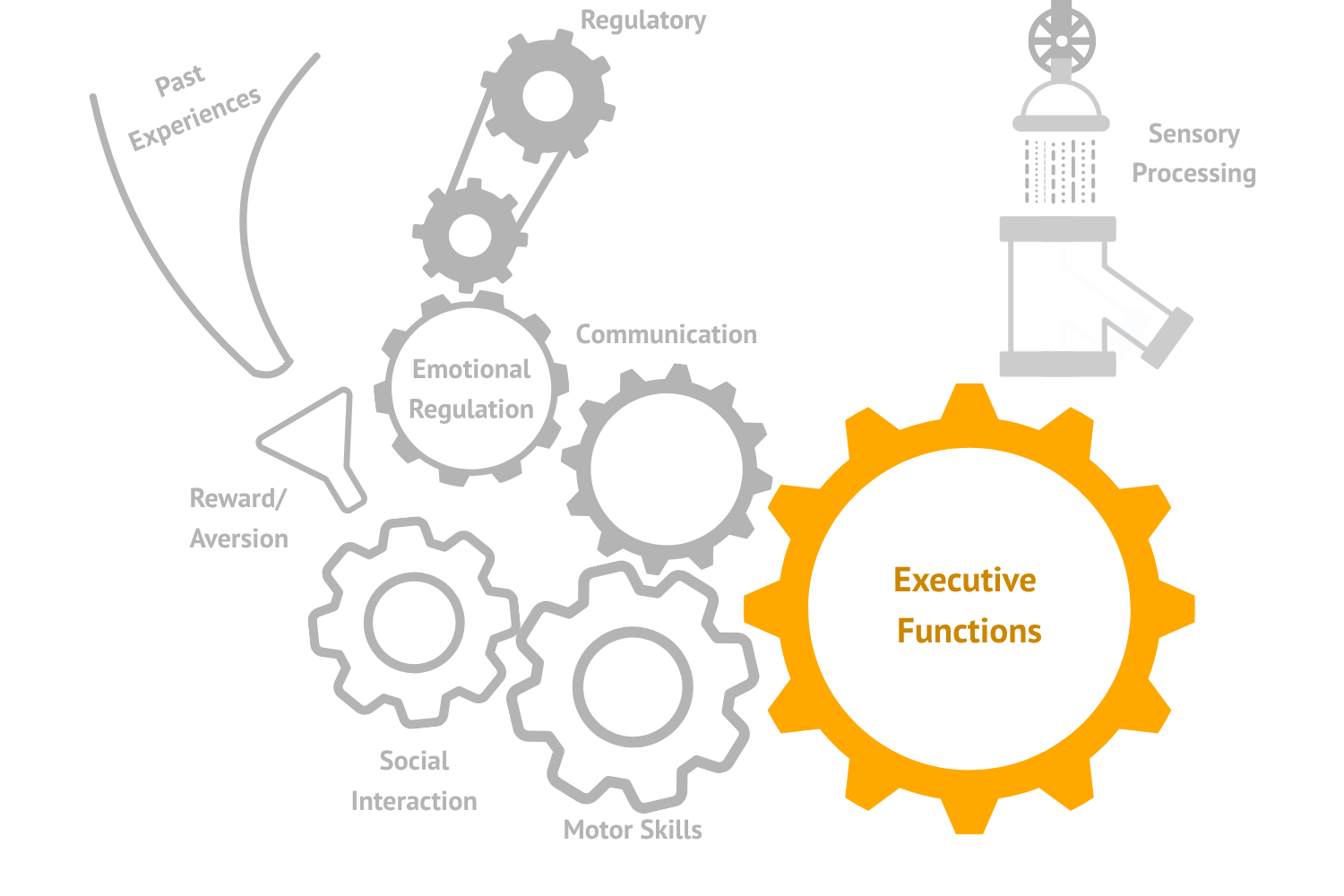
Executive functions are the cognitive processes we use to get any task done, from getting dressed in the morning to writing a dissertation. There are eight: working memory, shift, initiation, planning, organization, self-monitoring, inhibition and emotional regulation.
They happen continuously through every task. We shift our attention to start, use working memory to recall what we need, plan the task, and hold it all in mind. As we go, we organize our materials, keep our attention from being divided, and monitor our time and our emotional level so we know when we need a break. Some people's brains do this automatically. Others don't. Every person has their own executive functioning profile. Someone can have a really strong working memory and have a hard time with planning.

Working Memory
Working memory is holding information in mind while we use it.

Shift
Shift is moving our attention from one thing to the next.

Initiation
Initiation is starting a task.

Planning
Planning is working out the steps a task needs, in order.

Organization
Organization is keeping track of our materials, information and time.

Self-Monitoring
Self-monitoring is keeping track of how a task is going, how much time has passed, and how we're feeling.

Inhibition
Inhibition is holding back an impulse and keeping our attention from being divided.

Emotional Regulation
Emotional regulation, as an executive function, is noticing our emotions building during a task and shifting to regulate them.