Emotional Regulation
Emotional regulation brings together everything in the other five domains. It requires interoception, reading your internal sensations, along with shift, inhibition, self-monitoring and working memory. Past experience feeds in: whether the people around us, from infancy on, have read our needs accurately and believed what we're experiencing. So do neurochemicals, which carry attention, connection, alertness, stress and rest through the body.
Our brains can only do so much at one time. When the cognitive load is too high, we move into a threat response: fight, flight, freeze or fawn. Feeling safe with another person, and time to restore, bring us back to a regulated state. Neurodivergent people have the same emotional development as everyone else, so distress shows that needs aren't being met.
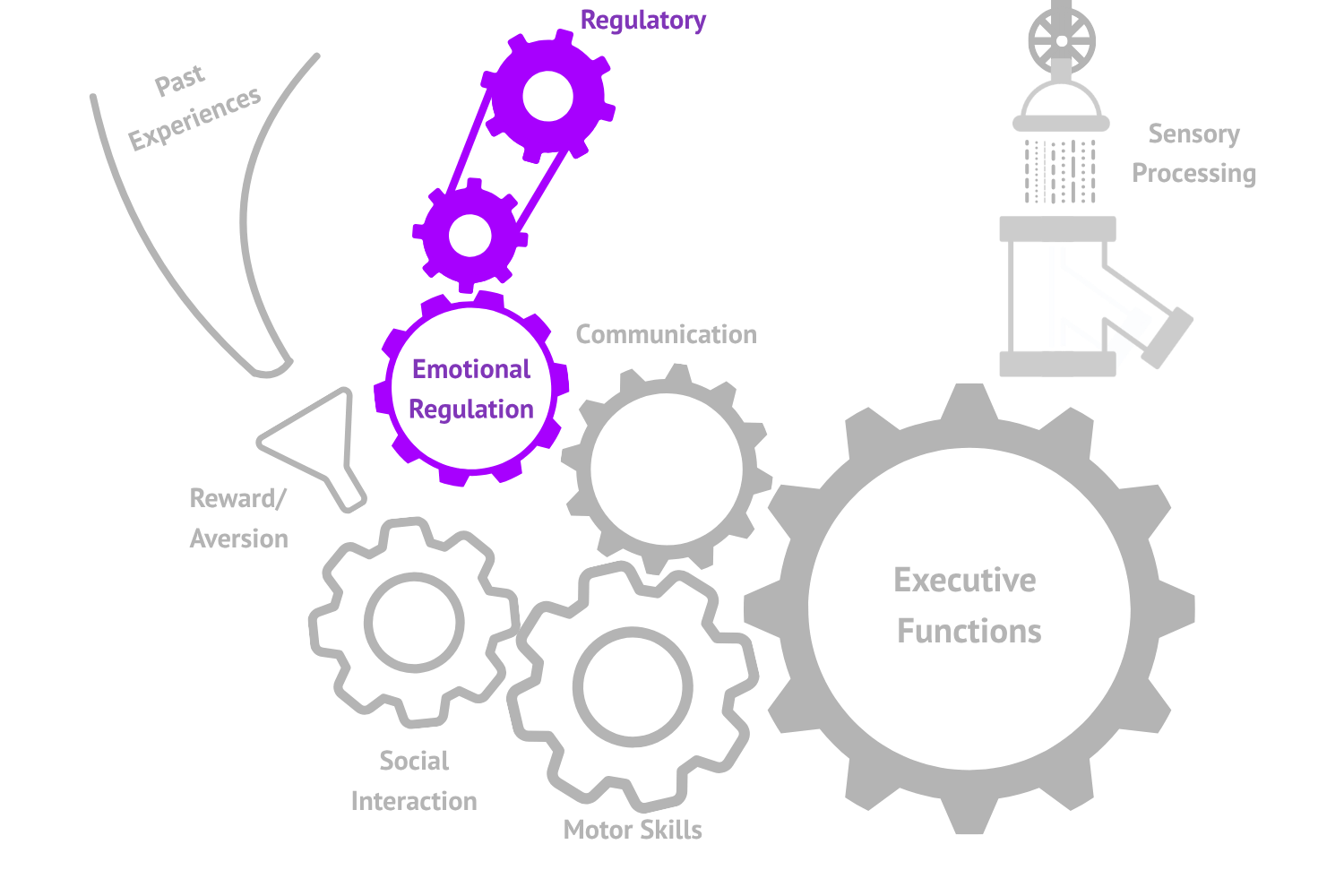
Attention
Attention is what holds our focus and how easily we can move it.

Connection
Connection is how being around other people affects how we feel.
Activation
Activation is how alert and ready to act our body is.
Exertion
Exertion is how much effort everything takes from us.

Restoration
Restoration is how our body and brain recover.