Social Interaction
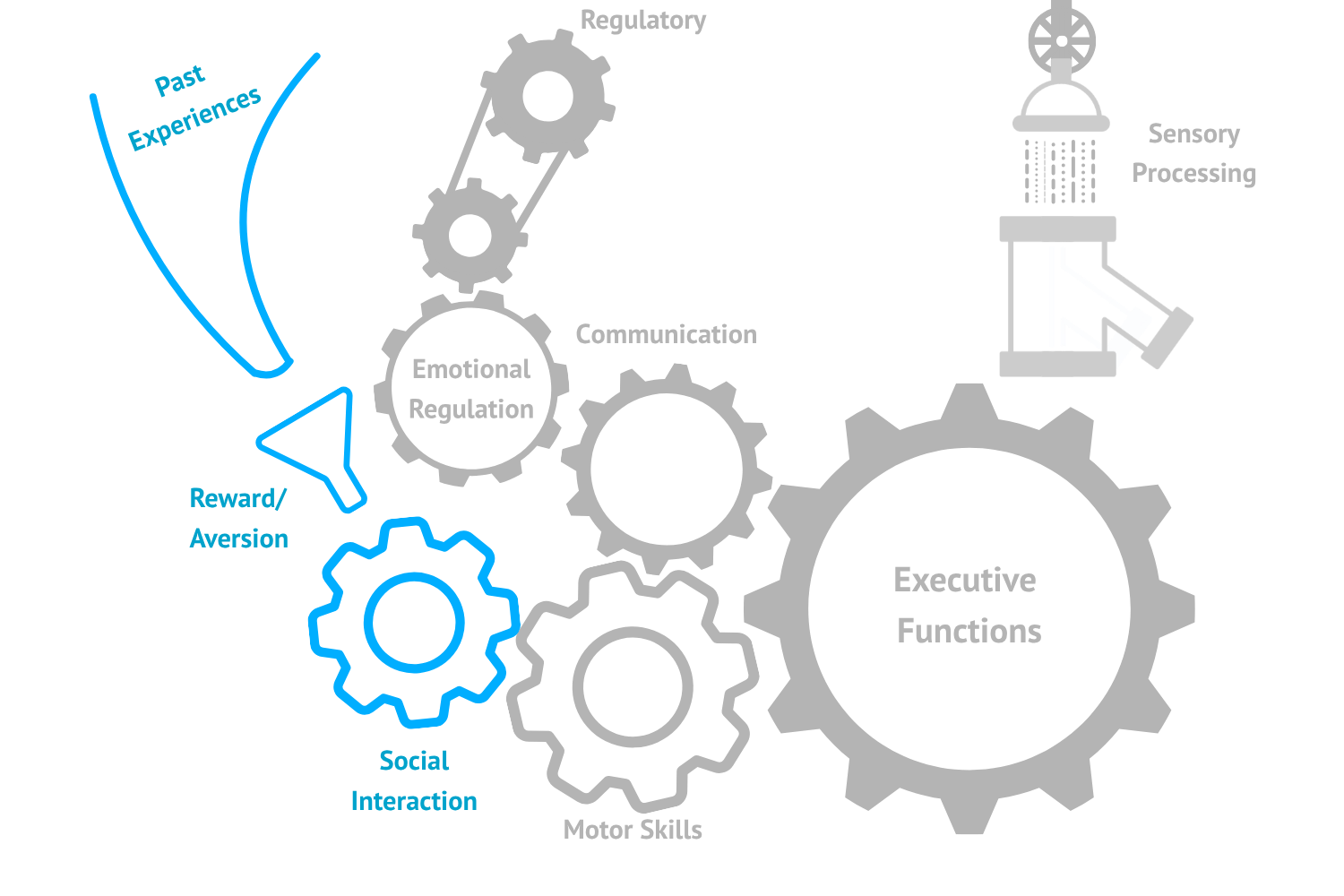
Social interaction builds on motor skills and communication, and adds nearly all of the executive functions. It also requires interoception, so you can monitor your internal sensations, know your emotions, and communicate what you intend. Past experience feeds in too. How people have responded to us, whether we've been understood, excluded or believed, shapes every interaction after. This makes social interaction one of the most taxing areas in the framework, and it's why it looks so different from one person to the next.
Social interaction starts with self-awareness: knowing what you need in a social situation, and exploring how your own body and emotions work. Misunderstanding runs both ways. When people of different developmental neurotypes communicate, messages break down quickly on both sides. This is the double empathy problem, and it's why understanding has to be mutual. Healthy relationships share the weight between people. Each person says what they need, and the other does the same back.

Self-Awareness
Self-awareness is knowing what we feel and what we need, from what our body tells us and what others have told us about ourselves.

Self-Exploration
Self-exploration is trying things out to learn what helps us, when we feel safe enough to try.

Mutual Understanding
Mutual understanding is two or more people understanding how each other experiences the world.

Interdependence
Interdependence is two or more people helping each other meet each other's needs.

Self-Advocacy
Self-advocacy is communicating what we need and what our limits are.